Why We Reject Vatican II

Sedevacantism Is Consistent with Traditional Catholic Teaching

We are a traditional Roman Catholic mission that holds the sedevacantist position. This means we believe that the Catholic Church founded by Jesus Christ is the one true Church, but that the Chair of St. Peter has been vacant since the death of Pope Pius XII in 1958.

In practical terms, we do not recognize the authority of the men who have claimed the papacy since Pius XII, beginning with John XXIII, nor do we accept the Second Vatican Council (1962–1965) as a legitimate Catholic ecumenical council.

The clergy who serve our Mission are affiliated with the Congregation of Mary Immaculate Queen (CMRI), which preserves the traditional Latin Mass, the traditional sacraments, and the doctrines and practices of the Catholic Church as taught before Vatican II.

Importantly, sedevacantists do not reject the papacy. We believe in the papacy so strongly that we cannot accept that a true pope could use the authority of the Church to teach error and contradict the Catholic Faith.
1. The Catholic Church Cannot Contradict Her Own Teachings

The foundation of sedevacantism is the traditional Catholic doctrine of the indefectibility of the Church.

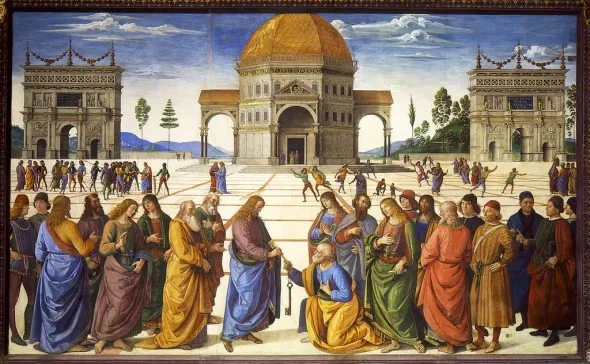
Jesus Christ promised St. Peter:

“Thou art Peter; and upon this rock I will build my church, and the gates of hell shall not prevail against it.” — Matthew 16:18

Catholics have always understood this promise to mean that the Church established by Christ cannot cease to exist, abandon the true Faith, or become an instrument for teaching a false religion to the faithful.

The First Vatican Council in 1870, under Pope Pius IX, taught that the Holy Ghost was not promised to the successors of Peter so that they might reveal new doctrines, but so that they might faithfully preserve and explain the revelation handed down by the Apostles.

This is an essential principle: Catholic doctrine can develop in its explanation and understanding, but it cannot reverse itself or contradict what the Church has already definitively taught.

A future pope cannot legitimately declare false what the Church has already infallibly declared true.

For sedevacantists, this principle is the key to understanding the crisis that began with Vatican II.

2. Vatican II Introduced Teachings That Contradict Catholic Tradition

The Second Vatican Council introduced substantial changes in the Church’s approach to religious liberty, ecumenism, relations with non-Catholic religions, and eventually Catholic worship.

Sedevacantists do not object to change merely because it is new. The concern is whether particular changes contradict teachings that the Catholic Church had previously established.

Consider two major examples:

Religious Liberty

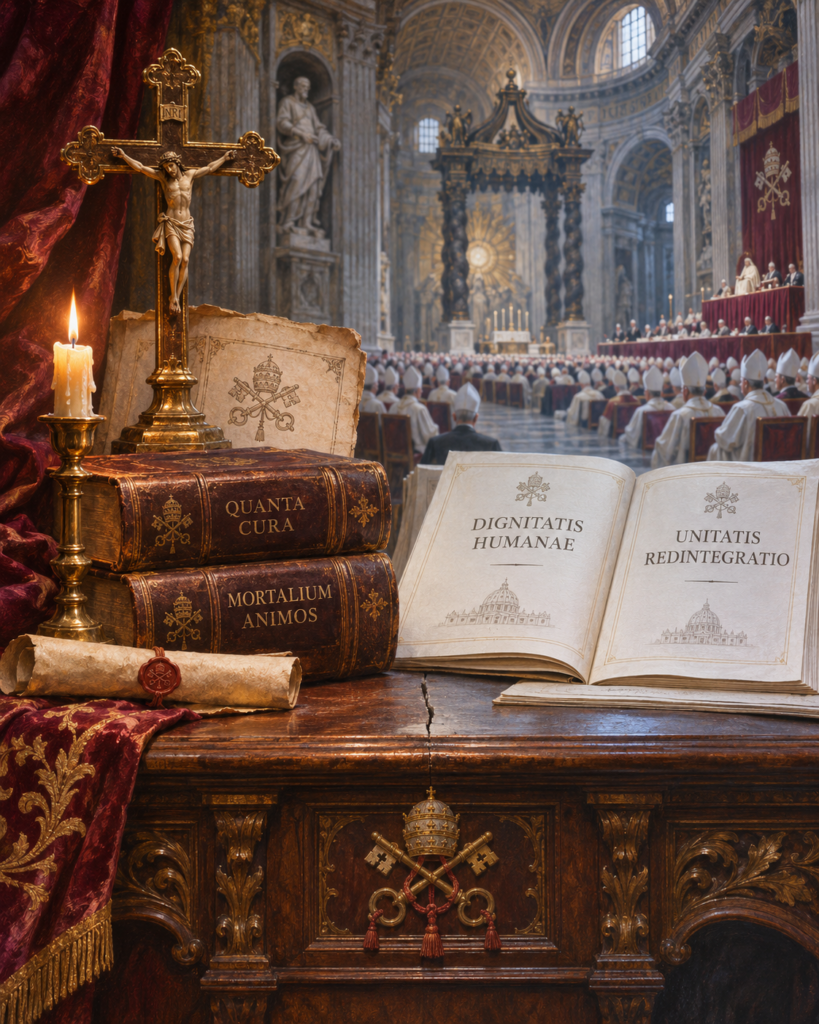
In Quanta Cura (1864) and the accompanying Syllabus of Errors, Pope Pius IX condemned certain liberal doctrines concerning freedom of religion and the relationship between Church and State.

Yet Vatican II’s Dignitatis Humanae taught that the human person possesses a right to religious freedom, understood as immunity from coercion, which should be recognized in civil law even for those who do not adhere to the true religion.

Sedevacantists argue that these teachings represent a substantial contradiction rather than merely a different application of the same Catholic principles.

Ecumenism

Pope Pius XI taught in Mortalium Animos (1928) that genuine Christian unity requires a return to the one true Catholic Church and rejected ecumenical movements that treated conflicting religious doctrines as equally acceptable.

Vatican II’s Unitatis Redintegratio, by contrast, encouraged ecumenical dialogue, certain forms of common prayer, and recognition of elements of sanctification within separated Christian communities.

This represents a departure from the Church’s earlier understanding of religious unity and the dangers of religious indifferentism.  These contradictions concern fundamental principles of faith rather than merely language or pastoral practice.

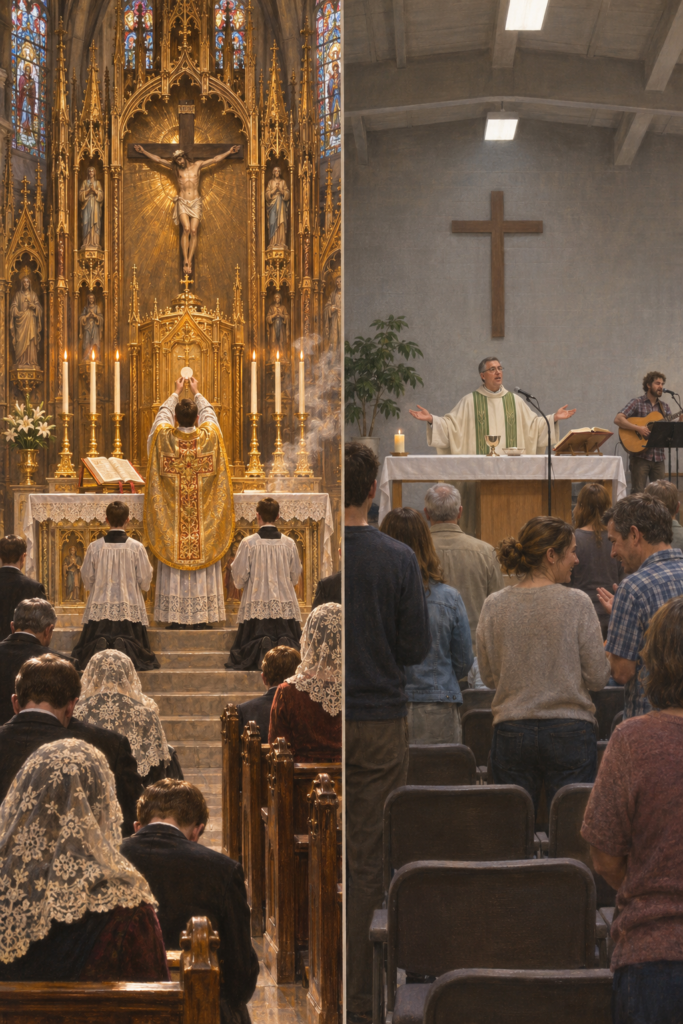
3. The Traditional Mass and the New Mass

Another central concern is the transformation of Catholic worship following Vatican II.

For centuries, the traditional Roman Mass clearly expressed the Catholic doctrine that the Mass is a true, propitiatory sacrifice in which the sacrifice of Christ on Calvary is made sacramentally present.

The Council of Trent explicitly defended this teaching against Protestant errors.

Following Vatican II, Paul VI promulgated a substantially revised Roman Missal in 1969, commonly called the Novus Ordo Mass.

Sedevacantists argue that the revised prayers and ceremonies weakened the expression of essential Catholic doctrines, particularly the sacrificial nature of the Mass and the unique role of the ordained priest.

The CMRI further questions the validity of certain postconciliar sacramental rites.

For sedevacantists, the crucial issue is not simply whether someone prefers Latin, beautiful churches, or traditional ceremonies.

It is whether the Church established by Christ could legitimately impose religious worship and sacramental disciplines that undermine the Catholic Faith.

4. Can a Heretic Be Pope?

This question is central to sedevacantist theology.

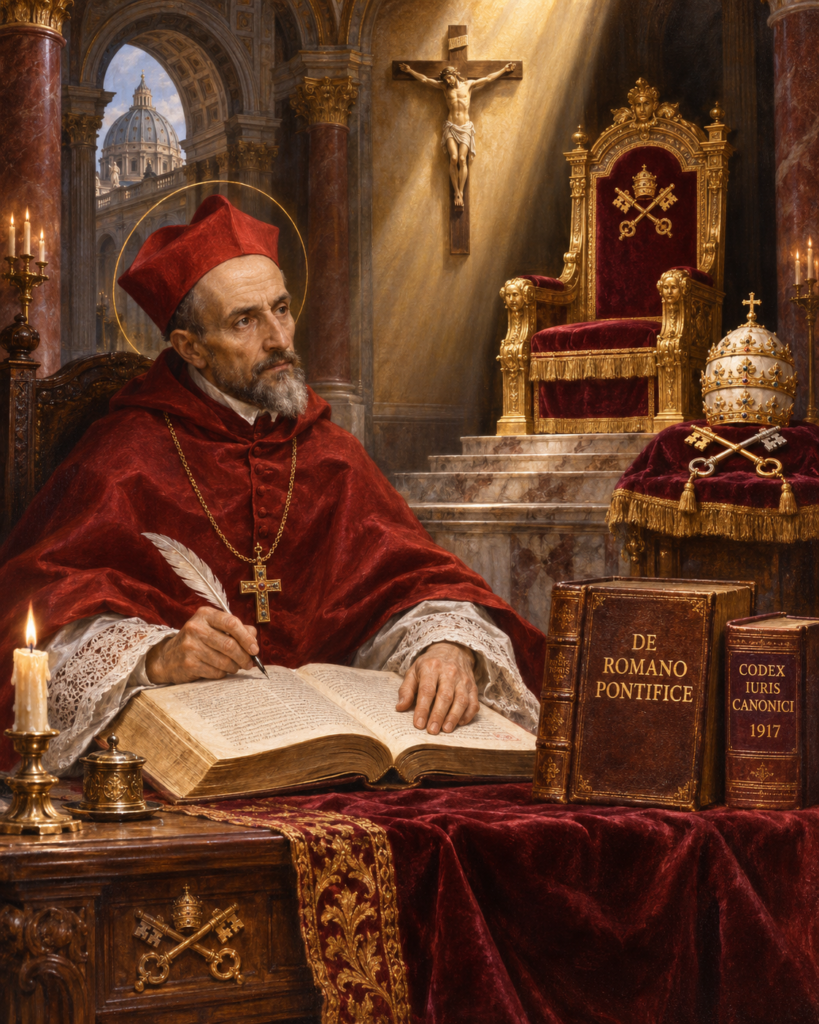
One of the most important authorities cited by sedevacantists is St. Robert Bellarmine, a Doctor of the Church and one of Catholicism’s greatest theologians.

In De Romano Pontifice, Book II, Chapter 30, Bellarmine defended the position that a pope who became a manifest heretic would, by that fact, cease to be pope, because someone separated from the Church by public heresy could not remain its visible head.

This is not a modern idea invented in reaction to Vatican II. The possibility of a pope losing his office through manifest heresy was discussed by Catholic theologians long before the twentieth century.

The 1917 Code of Canon Law, Canon 188 §4, also provided for the automatic vacancy of ecclesiastical offices through public defection from the Catholic Faith. Its application to the unique office of the papacy, however, involves additional theological questions.

Bellarmine’s position on a manifestly heretical pope was an influential theological opinion, not a separately defined dogma. Nevertheless, it provides a traditional theological basis for the sedevacantist argument.

The reasoning is that if someone publicly rejects the Catholic Faith, he cannot legitimately exercise authority as the supreme teacher and guardian of that same Faith.

A person does not become Catholic merely by occupying an important ecclesiastical office. He must profess the Catholic Faith.

Sedevacantists believe the post–Vatican II papal claimants have manifested adherence to doctrines incompatible with the traditional Faith and therefore cannot be legitimate successors of St. Peter.

5. Doesn’t Papal Infallibility Mean the Pope Can’t Make Mistakes?

No. Catholic teaching has never maintained that a pope is personally sinless, always prudent, or incapable of making an error in every private statement.

Papal infallibility has specific theological conditions, particularly when the pope definitively teaches a doctrine of faith or morals to be held by the universal Church.

Sedevacantism does not depend on the mistaken belief that a legitimate pope can never make an ordinary mistake.

Instead, it rests on a broader question about the Church’s divinely protected teaching authority.

If the Catholic Church is indefectible, and if its legitimate pastors possess the authority to guide the faithful in matters of faith and worship, could the Church’s supreme authorities officially establish doctrines and universal disciplines fundamentally contrary to the Catholic religion?

Sedevacantists answer no.

This creates an apparent dilemma: Either the doctrinal and liturgical changes following Vatican II are consistent with the traditional Catholic Faith, or the men responsible for imposing those changes lacked legitimate Catholic authority.

Because sedevacantists believe substantial contradictions exist, we conclude that the men claiming the papacy since Pius XII have not possessed legitimate papal authority.

We do not believe we are deposing a true pope. Rather, we believe the papal office is already vacant.

6. How Can the Catholic Church Exist Without a Pope?

The Catholic Church has experienced vacancies of the papal office many times throughout history.

Between the death of one pope and the election of another, the papal office remains vacant, but the Catholic Church does not cease to exist.

The sedevacantist position is that the present vacancy has continued for an extraordinary length of time because of an unprecedented crisis within the Church.

This undoubtedly presents difficult theological questions, particularly regarding how a future pope could be elected and how the Church’s visible hierarchy continues during such a prolonged vacancy.

Nevertheless, sedevacantists maintain that Christ’s promise of indefectibility concerns the continued existence of His Church, her essential constitution, and her true Faith. It does not necessarily require an uninterrupted succession of reigning popes without periods of vacancy.

We believe the Catholic Church continues to exist through those who preserve and profess her traditional Faith, worship, and sacraments.

The priests and bishops of the CMRI seek to continue that mission until legitimate Catholic authority is restored.

7. Why This Is Not a Rejection of Catholic Tradition

Sedevacantism is sometimes portrayed as a rejection of the Catholic Church or an attempt to establish a new religion.

But our intention is precisely the opposite.

We believe that the Catholic Faith is something received from Christ and the Apostles, faithfully preserved and transmitted through the centuries. No individual, including a pope, possesses authority to replace that Faith with a contradictory one.

St. Paul warned:

“But though we, or an angel from heaven, preach a gospel to you besides that which we have preached to you, let him be anathema.” — Galatians 1:8

Sedevacantists understand this warning as expressing the duty to remain faithful to divine revelation regardless of the apparent rank or authority of someone presenting a contradictory teaching.

We recognize that the conclusion that the papal office has remained vacant since 1958 is a theological judgment drawn from these principles. It is not itself a dogma solemnly defined by a pre–Vatican II pope or council.

Other Catholics dispute both the sedevacantist interpretation of Vatican II and its conclusions concerning papal legitimacy.

Nevertheless, the underlying principles to which sedevacantists appeal—papal primacy, the indefectibility of the Church, the immutability of revealed doctrine, and the necessity of preserving the Catholic Faith—are deeply rooted in Catholic tradition.

Conclusion

We are sedevacantists not because we reject Catholic authority, but because we believe Catholic authority must remain faithful to the religion established by Jesus Christ.

We do not believe the Catholic Church disappeared after 1958. We believe the authentic Catholic Faith continues, even amid an extraordinary crisis.

We believe in the papacy, in the authority of legitimate successors of St. Peter, in the traditional Holy Sacrifice of the Mass, in the seven sacraments, and in the doctrines consistently taught by the Catholic Church throughout the centuries.

Our position is that genuine fidelity to the Church sometimes requires refusing to recognize a claim to ecclesiastical authority when that claim appears irreconcilable with the Church’s established Faith.

For us, sedevacantism is not about inventing a new version of Catholicism. It is about preserving the Catholic religion handed down to us.

The Catholic Church cannot cease to be Catholic. Christ promised that the gates of hell would never prevail against His Church, and it is in that promise that we place our trust.


Principal theological sources